


The Campaign and Destination Disagree
A service ad can send visitors to a general page where they have to look for the service again. Check whether the page explains the service the ad offered and makes the next step clear.
Match the Page to the Campaign
Improve an existing page or build one for a specific campaign. We plan the offer, copy and mobile design together and check where the agreed inquiry, booking or purchase action leads. Our work draws on over 20 years of experience in website design and direct response.

An Offer People Recognize
Carry the campaign promise through to the page.

A Clear Path to Action
Show the offer details and relevant proof, then make the next action clear.

Phone and Desktop Checks
Check that visitors can read the offer and complete the agreed action on desktop and phone.
Campaign, Page and Response Checks
Lost inquiries can begin before the page, on the page, or after the response. Look at the campaign promise, the buying decision, and the handoff before deciding what to rebuild.
A service ad can send visitors to a general page where they have to look for the service again. Check whether the page explains the service the ad offered and makes the next step clear.

An unclear offer can attract unsuitable inquiries. Review what the right customer needs to understand and which requirements establish fit.

A confirmation message does not prove that someone received the inquiry. Check delivery, notifications, booking behavior, and who responds.

Contact clicks, valid requests, qualified prospects, and customers are different measures. Decide which records support the question you need answered.
Website Project · Accident Reporter
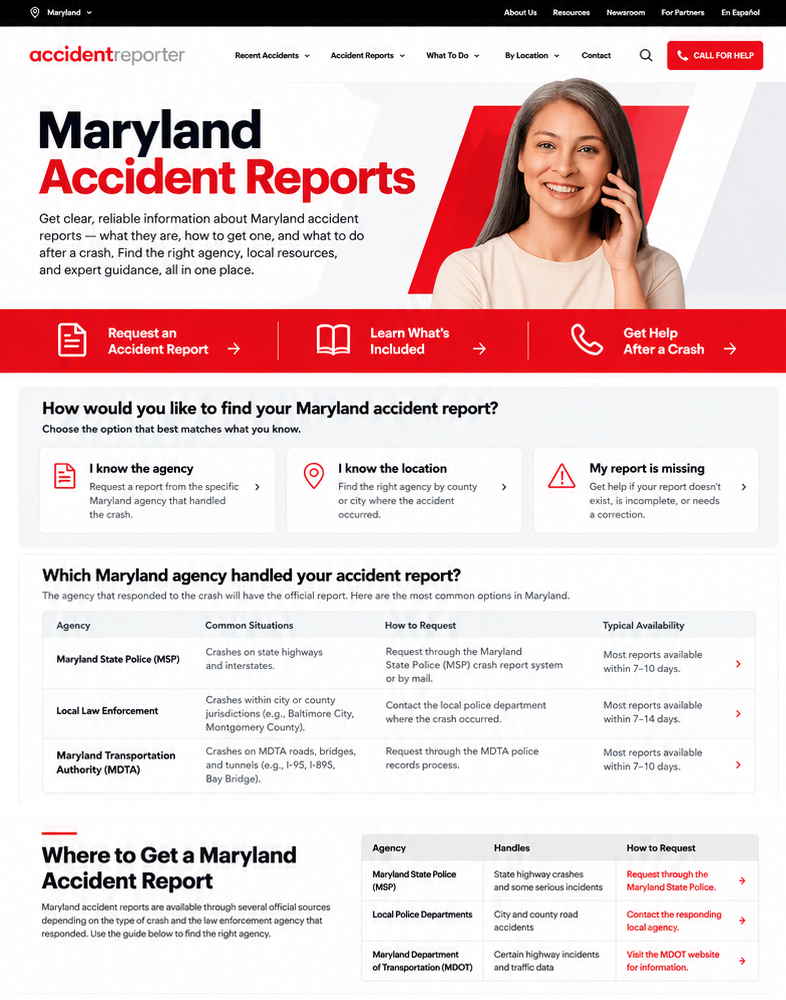
A visitor may know the agency, only the location, or neither. Accident Reporter demonstrates why a useful page sometimes needs several clearly explained routes rather than one identical action for everyone.
Start With the Need
A specific report and location make the purpose immediately clear. Visitors can judge whether the page addresses the problem that brought them here.
Organize the Choice
Report requests, guidance, and help options address different needs. Give the primary action priority while keeping genuinely useful information within reach.
Support the Response
Agency, location, and missing report paths reflect what a visitor already knows. The page helps people find a relevant way forward.
Choose the Right Work Before the Build
A new landing page is one possible answer. First, separate the campaign promise, the decision on the page, and what happens after someone responds.
Compare the audience and the promise in the ad, email, or referral with what the business actually offers.
Bring: the campaign message and the intended customer.A clearer page cannot make an irrelevant offer right for the visitor. Align the promise before deciding what to build.
Check whether the offer, useful proof, and next action match the campaign. Keep helpful routes to information the visitor needs.
Bring: the destination page and the action you want.Resolve the specific gap in the message, supporting detail, or response path.
Give that offer its own explanation and response path, connected to the wider website where useful.
Check that requests reach the team and calls connect. Count genuine received inquiries once, excluding spam and duplicates. Check separately which requests fit and what the team does next.
If you know where inquiries go or where they stall, share an example. We can agree which records to review later.Delivery, routing, response handling, and the sales conversation may need attention. A page redesign alone may miss the problem.
Selected Landing Page Work
These product pages show different ways to present an offer. Compare the pricing button for Super Beets, the Order Now navigation for Ronco and the trial request form for Line Away.

Pricing and Trial Options Beside the Product

Appliance demonstration and product detail
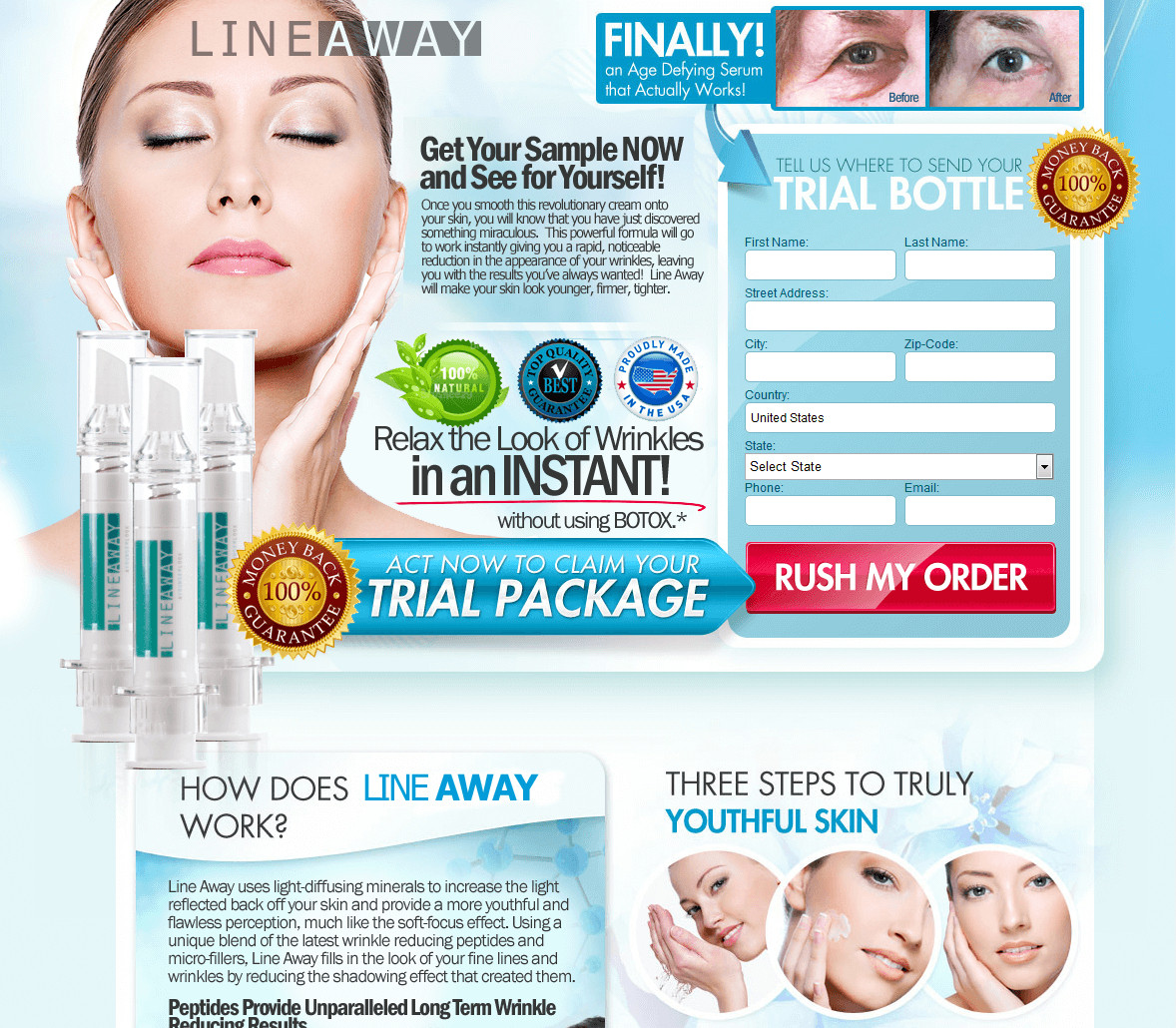
Trial offer beside the response form
Long Term Client · Accelerate My Practice
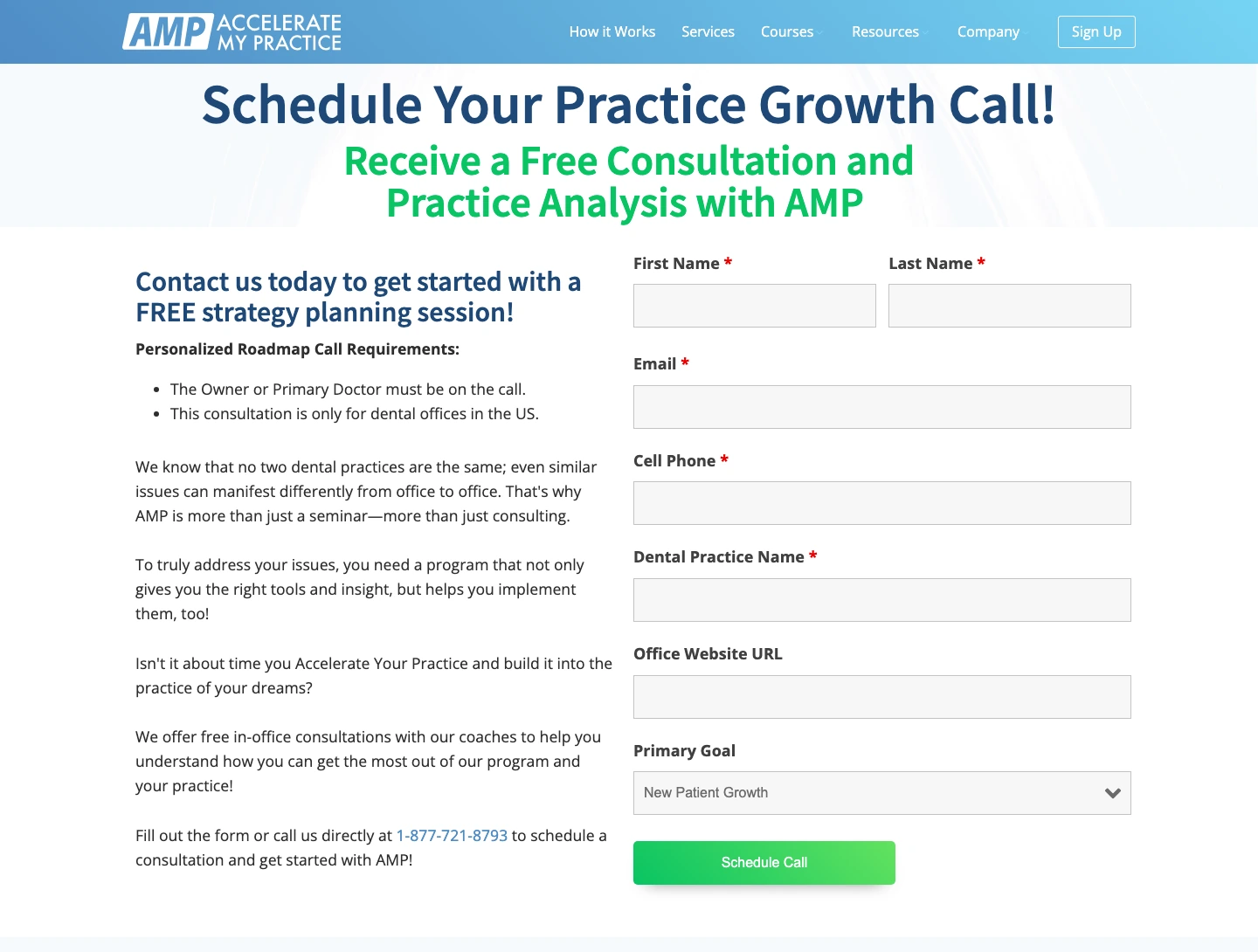
The Accelerate My Practice example explains a growth call for U.S. dental offices. The page says the owner or primary doctor needs to join the call and asks what the practice wants to improve.
Accelerate My Practice · Consulting for Dental Practices
Make the Offer Specific
The Accelerate My Practice example names the growth call and practice analysis before asking for contact details. It gives dental practices information they can use to decide whether to request a call.
Help the Right Prospects Decide
The page describes the offer for U.S. dental offices and says the owner or primary doctor must join the call. Readers can check those requirements before they complete the form.
Give the Conversation Context
Practice details and a primary goal can help the team prepare. Review the value of each field instead of assuming the shortest possible form is always the right choice.
Our Landing Page Process

Define the audience, offer, questions, and action the page needs to support.

Plan the information, genuine proof, and page structure around the buying decision.

Develop the page and the forms, tracking, and business connections in your scope.

Check the agreed visitor action before launch. Confirm that a test call, form submission or booking reaches the intended team or system where included, then agree what to review after launch.
Know What You Are Agreeing To
A page can look finished while the copy is waiting for approval or the form sends inquiries to the wrong place. Define the work, the decisions and the response path before the build begins.
Define the Work
Agree whether the project needs new copy, a revised page or a new design, and which campaign audiences or offers it must serve.
Bring From Your Business
Accurate product or service details, offer terms, genuine customer proof and a person who can approve the direction.
Define the Work
Confirm the form, booking or purchase route, required connections and tracking included in the proposal.
Bring From Your Business
The receiving account or team, necessary access, useful qualification details and responsibility for responding.
Define the Work
Clarify the platform, account access, editing controls, licensed assets, hosting or software costs and the handoff.
Bring From Your Business
Existing website and account details, who will make future updates and any requirements your team must retain.
Define the Work
Set review points and launch checks. Separate the initial build from any later updates, reporting or experiments.
Bring From Your Business
Launch constraints, timely approvals, the traffic plan and feedback on whether inquiries become useful business.
Before You Send Visitors
Launch checks belong in the scope. Decide who verifies each task and who approves release.
Accurate offer. The content, terms, evidence and destination have been approved.
Usable response. Complete the agreed contact, booking or purchase task on desktop and phone.
Working handoff. Confirm the request reaches the intended destination and the visitor sees what happens next.
Useful measurement. Verify the agreed events and decide what the business must record after contact.
The investment and schedule depend on the copy, designs or variants, integrations, materials and approvals involved. A launch is a working starting point. Ongoing testing is a separate decision based on your goals, available traffic and agreed scope.

Portfolio example: The Data Group website.
Know What the Response Is Worth
Both measures show an average. The qualified group includes only valid inquiries that meet the fit criteria your team agrees on.
Use the same advertising spend, campaign group, reporting period and attribution rules for both calculations. Apply the same receipt and duplicate checks before assessing fit.
Advertising spend
Valid unique inquiries
Media cost per valid inquiryConfirm the business received each genuine inquiry. Count it once and exclude spam.
Advertising spend
Qualified unique inquiries
Media cost per qualified inquiryFrom the same valid unique inquiries, count those that meet your agreed fit criteria.
Agree what qualifies an inquiry before reviewing results. Apply the same criteria, such as service need, location or eligibility, to each genuine inquiry received. Use booking or sales records separately to confirm customer outcomes.
These two measures use advertising spend. For a broader cost comparison, add the relevant build, tool and service costs for the same campaign group and reporting period. If no inquiries meet a measure’s definition, that cost per inquiry is unavailable.
Removing every question may bring more forms and more unsuitable requests. Asking too much may discourage suitable prospects. Choose fields around the decision and the information your team needs, then review both completion and fit.
Before Launch
Use the agreed launch checks to verify that the response reaches the right place. Review actual inquiries and business outcomes separately after launch.
When Evidence Supports a Test
An A/B test needs a clear question, random assignment, the same reliable measurement for both versions and enough eligible traffic to detect a difference worth acting on. If a useful comparison is unlikely, check usability and real customer questions first. A test may still be inconclusive.
Measurement and any ongoing testing are agreed in the project scope. Available inquiry and sales records determine how far the analysis can follow the response.
Client Perspectives
We don’t advertise online, and our business is thriving due to our online presence. They handle the website, social media, off line print materials, and everything else in between...
Connie Hollingshead
Bitter Goose Lodge
Revenue Surge has the experience and the reputation to match. In an industry where the details matter it’s important to trust the professionals you have working for you...

Corey Rosensteel
Rosensteel Fleishman Law Firm
He does great work and he gets things up and running very quickly! I have been very pleased...

Dr. Raj Kakar
Dr. Kakar’s Pillow
Frequently Asked Questions
Practical answers about scope, platforms, cost, launch and what happens after an inquiry.
Landing Page Planning
Tell us what you want to improve. We can discuss what customers expect before they land, what the page needs to explain or where the inquiry goes. Share the ad or page link if it helps.

