

An Offer That Cannot Carry the Cost
A low priced product with expensive shipping or frequent returns may leave little room to acquire a customer. A service business needs inquiries it can qualify and serve.
DRTV Production
Make the product clear. Give the viewer a reason to act. Revenue Surge connects the commercial conversation with the offer, website, and customer decisions that come next.
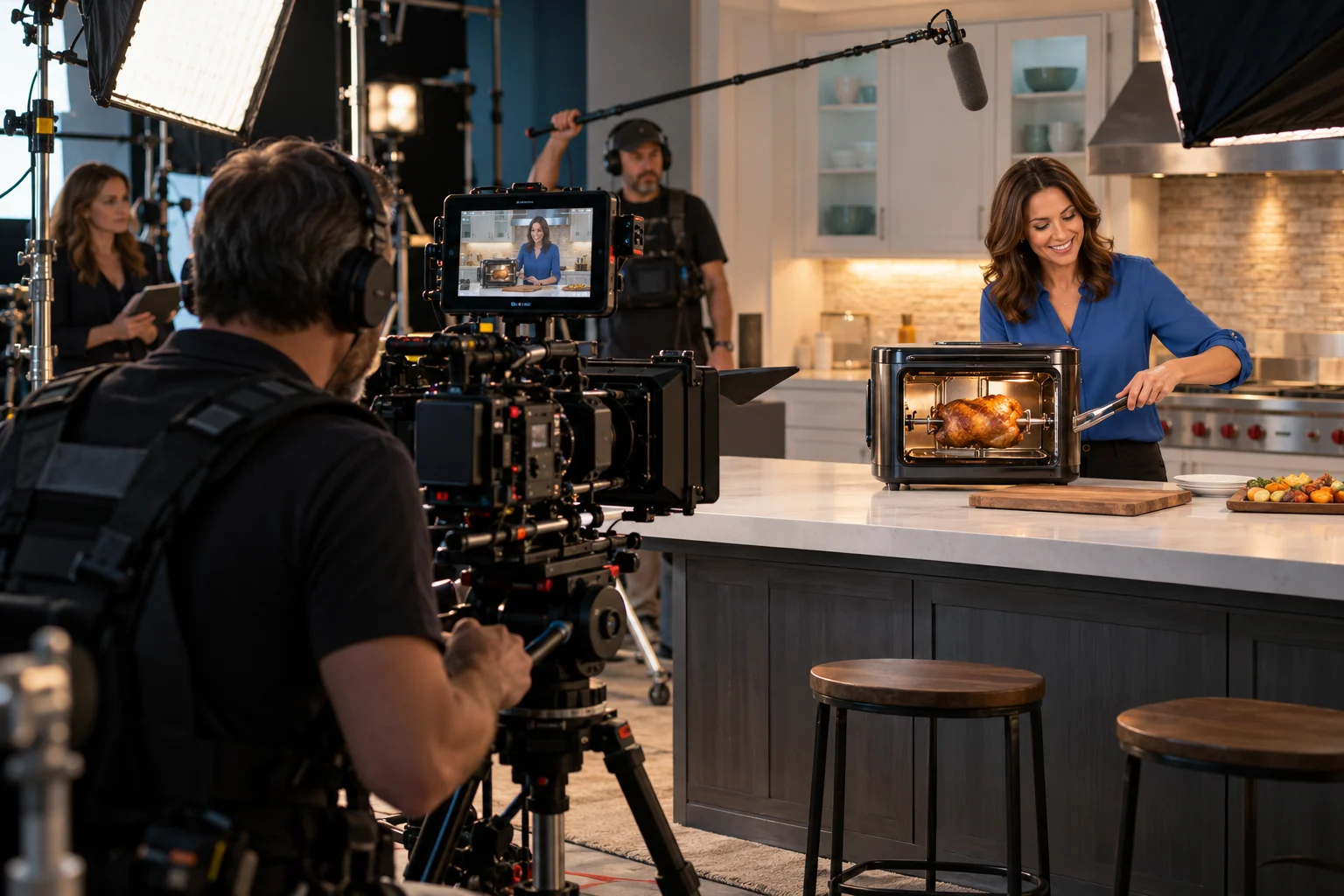
Every Second
Has a Job to Do.

Make the Product Clear
Show the value. Support the claim. Give the viewer a reason to act.

Plan Before the Shoot
Set the offer, versions, approvals, and intended use before filming.

Prepare for the Response
Connect the commercial to the page, call, order, and customer handoff.
Before You Invest in TV
A polished commercial is only one part of the investment. Start with what you sell, what a customer is worth, and whether your business is ready for the response.
A low priced product with expensive shipping or frequent returns may leave little room to acquire a customer. A service business needs inquiries it can qualify and serve.
A new offer, missing product detail, or different usage requirement can change the work. Decide what the camera must capture and which versions you may need first.
An unanswered campaign number, confusing order page, or slow follow up can waste attention you have paid for. Test the response route before airtime begins.
Bring the offer, commercial, or idea you have. We can discuss the decisions worth resolving before you commit.
Inside a Response Commercial
DRTV means direct response television. The spot asks for a specific action. The creative has to explain the value, earn belief, and make that action clear.
Commercial Planning Concept
Product details, approved offer, and relevant terms
One Memorable Next Step
What can the camera actually show? Plan the product action, useful detail shots, and the evidence behind any objective claim.
What does the buyer get, on what terms, and why act? The spoken promise, on screen wording, and destination should agree.
Choose a response viewers can understand and remember. Check readability, time on screen, and the actual placement requirements.
What the Viewer Sees
A clear demonstration, the important product detail, an understandable offer, and a readable response instruction.
What the Viewer Hears
A reason to care, an explanation supported by the evidence, and the same next step shown on screen.
The Commercial →
Call →
Campaign number → correct team → inquiry record. Confirm hours and capacity.
Visit →
Matching offer → form or checkout → recorded inquiry or order. Test it on a real phone.
Who qualifies the inquiry, answers the question, fulfills the order, and feeds the result back?
Some viewers search the brand or return later. Keep the message recognizable. Not every response can be tied to an airing.
Concept artwork explains planning decisions. It is not a client commercial or a Revenue Surge production credit. QR codes and interactive features depend on the actual placement.
Creative Development
One possible structure for a kitchen product spot. The right sequence and length depend on your product, audience, evidence, and placement.

Which familiar situation will earn attention?
What frustration must the buyer recognize?
Which product action needs a clear shot?
What can this demonstration honestly establish?
What is included, and which terms matter?
What should the viewer remember and do?
A Useful Creative Test
Compare a problem opening with a demonstration opening while keeping the offer and destination consistent.
What Makes the Comparison Useful?
Name the question, versions, outcome, and reporting window first. Different audiences or placements can make findings directional rather than conclusive.
TV Commercial Production Scope
A commercial, its media placement, and the response experience are different pieces of work. Your proposal should name the deliverables, costs, approval owners, and services arranged separately.
Footage and Versions for Agreed Use
Demonstration · Presenter · Product details · Response frame
Possible scope options. Each length, edit, and export is agreed in the proposal.
The approved story, demonstration, offer, and response action.
A focused reminder may need a different edit or voiceover, not just a shorter export.
Capture the footage needed for a second creative approach before the shoot ends.
Agree which price, terms, destination, or response details may change later.
Before the Shoot
Audience and offer. Supported claims. Script and shot list. Intended placements and lengths. Talent, music, usage terms, and approval owner.
Before the Ad Runs
Approved versions. Placement requirements and acceptance. Correct offer and destination. Tested call or order route. Named response and reporting owners.
The approved script, demonstration, edit, and version list. Confirm revisions, source file access, usage rights, and renewals.
Who makes and approves each asset?

The actual placements, schedule, technical requirements, and delivery acceptance. A finished master is not accepted everywhere automatically.
Who buys, checks, and delivers?
The matching offer page, phone routing, form or checkout, and inquiry handoff. Include the team that must answer and fulfill.
Who receives and follows through?
We define Revenue Surge’s role and the work of your team or other providers in the agreed scope. Producing an export does not by itself grant unrestricted talent, music, footage, or source file rights.
From Brief to Review
A clear plan gives each decision an owner before the next commitment.
1
Set the promise and confirm the support for the demonstration.
2
Review script, storyboard, shot needs, versions, and usage.
3
Review the agreed edits and actual placement requirements.
4
Check the destination and handoff, then use available outcomes to choose the next question.
Customer Acquisition Economics
Before judging the creative, decide what counts as a useful response and what your business can afford to acquire a new customer. More inquiries alone do not answer either question.
Planning Example. Assumptions Only.
100 unique inquiries × 40% qualified × 25% close rate = 10 new customers. Use the same prospect group and observation window. Repeat calls, visits, and forms are not automatically separate people.
Assume a $100 Total Acquisition Allowance per New Customer
$100 × 25% = $25
per Qualified Inquiry
This is the total allowance across acquisition costs, not a media bid or recommended budget. Production, media, agency work, and response handling consume that allowance.
Choose an allowance from your own contribution after relevant product or service costs, fulfillment, fees, and returns. These assumed 10 customers imply a $1,000 total cost allowance for this example only. Actual TV production and media may need a very different budget. The model does not predict inquiry volume, qualification, close rate, or sales caused by TV.
What happened? Keep creative version, placement or airing, response route, qualification, outcome, and reporting window where the information is available.
What can reasonably be connected to the campaign? Dedicated routes and matching rules have gaps. Explain the assumptions and avoid counting the same customer twice.
What happened because of TV? Attribution alone does not prove additional sales. A suitable controlled study answers a different question, where feasible.
For product orders, define new customers separately from repeat buyers and account for cancellations and returns. For service inquiries, allow enough time for the sales cycle. Align cost allocation and customer definitions before comparing campaigns.
Budget and Timing
The scope drives both cost and schedule. A useful quote separates asset production from media and the work needed to handle the response.
Demonstration complexity, locations, talent, production requirements, and the footage needed for planned variants.
Agreed lengths, alternate openings, offer updates, graphics, audio, revision rounds, and delivery exports.
Media, territory, term, talent and music permissions, renewals, and any source file handoff.
Airtime or placements, landing page or checkout work, call handling, tracking setup, and reporting. Identify separate costs and owners.
Share your intended first air date and placement plan early. Script approval, evidence, talent availability, filming, edit feedback, rights, and delivery review all affect the schedule. No universal price or turnaround fits every commercial.

Real Product Website Work
Revenue Surge brings over 20 years of marketing and website experience to the commercial conversation, including websites for direct response advertisers using TV, radio, and print.
Our documented work includes product naming, identity and packaging, website copy, ecommerce, and conversion optimization. The real page shows the product explanation, offer details, and order path that a response campaign needs to consider together.
Product website and response experience. This example is not a television production credit or a claim about TV campaign results.
Explore Our Product Website WorkA Useful First Conversation
Tell us what you sell, who you want to reach, and what you want television to accomplish. We can discuss the creative, response readiness, scope, and practical next decisions.
Have an existing commercial, footage, placement plan, budget range, or first air date? Share what you have. A finished script or professional brief is not required.
Discuss Your TV CampaignClient Perspectives
Client perspectives on the marketing, website, and conversion work behind the response.
He does great work and he gets things up and running very quickly! I have been very pleased...
Dr. Raj Kakar
Dr. Kakar’s Pillow
Revenue Surge has created websites, landing page and optimization that has supported the digital strategies of THOR Associates as well as our clients. All with fantastic results...
Fern Lee
THOR Associates
It is refreshing to deal with a company which not only simplifies every step of implementation and reporting but, more importantly, does not over promise while often delivering above expectations. The company I am referring to is Revenue Surge...
George Smith
GWS Consulting
Frequently Asked Questions
Understand the production, campaign scope, and response plan before you start.
Make Every Second Count
Start with your product, your audience, and the response you want. Let’s discuss what needs to be made, what needs to be ready, and where Revenue Surge can help.

