What Makes Returns Easier to Understand?
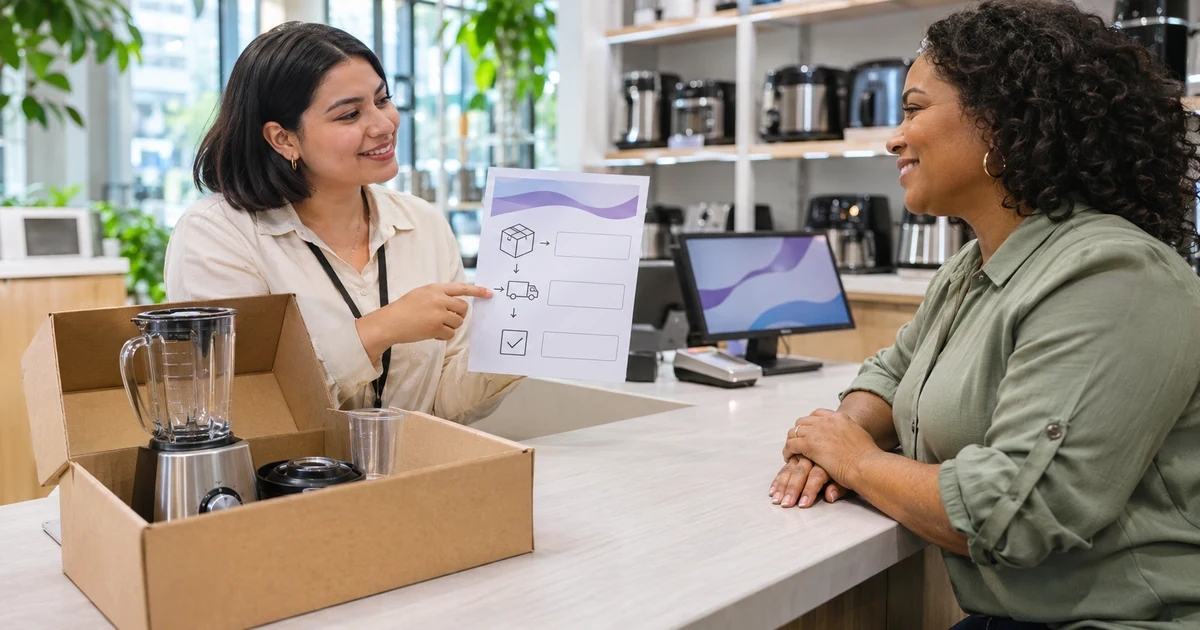
An easy return policy tells shoppers whether their item qualifies, how much time they have, which costs apply and how to start a request. Show those answers where customers decide to buy. Then check that the same terms follow the item from the product page to the confirmation and return instructions.
Tell Shoppers Which Terms Apply Before They Pay
Start with one product option and write down the terms the store has approved for it.
- When the return window starts. Specify the event that starts the clock, such as delivery or pickup, and how long shoppers have to take the required step.
- What counts as starting a return. Say whether customers must submit a request, ship the package or bring the item to a store by the deadline.
- Which items and conditions qualify. Show exceptions where shoppers choose an option. If a refurbished version has different conditions from the new one, check that customers can find the correct terms for the version they select.
- Which costs apply. State who pays return shipping and show any applicable fee. If the store handles different situations differently, explain where a customer can find the terms that apply to theirs.
- How to start. Give the customer the first approved action, such as opening an order and selecting a return option or contacting the store through its normal support channel.
For example, if your store allows 30 days from delivery to request a return, say that directly. If an eligible request produces shipping instructions later, explain that next step separately. A shopper can then tell what to do first and which deadline applies.
Compare Return Terms for the Same Product Option
Pick one product option on a phone. If your store has an approved exception for an item or variant, use that example. Check the product page, cart and last public checkout preview you can reach before entering personal or payment details or placing an order. Keep the option and market the same throughout the check.
Use approved sample messages to compare the order confirmation and return instructions. Look for differences in when the deadline starts, which condition qualifies, who pays to send the item back and how the customer begins. A message that acknowledges a return request should explain how the customer will learn the decision, the next shipping step or when to expect a refund update, using the store’s own process.
Baymard’s research covers usability problems in online returns, including how shoppers find and use the return process. Baymard research on ecommerce returns
What Should I Check When Return Terms Differ?
Confirm which policy applies to the same product option, market and purchase date. Find the approved wording and ask the person who handles returns to explain the actual process. Update the inconsistent page or message and repeat the same walkthrough with that product option.
For an existing order, use the terms that applied to that order and follow the store’s approved support process. A current product page may reflect a later policy. Keep the source and effective date with the internal policy record so staff can check it without guessing.
What to Read Next
What Should Shoppers Know Before Checkout? to check how product details, delivery charges and return terms carry into the cart.
Ask One Question About How You Explain Returns
Tell us which return detail customers have trouble finding. You can share the public product page or policy if it helps. We can help you decide where to check the wording first. Keep order records, customer details and account access with your store.