


Should We Increase the Budget?
Compare spend, genuine received inquiries, fit and confirmed new customers for the same acquisition group and period. Allow the same time for follow up before deciding whether to spend more.
Decide What to Check Before You Invest
Start with one question about your campaigns, website, reporting or inquiries. We can discuss which records a digital marketing audit should review and what decision the findings could support.

Review the Evidence
Choose the Next Step

Choose What to Check First
Review what the records can verify and which questions still need a test.
Compare Costs With Recorded Outcomes
Compare campaign costs, received inquiries and confirmed new customers where your records support a match.

Agree on Priorities
The agreed report can set out findings, recommended priorities, responsible roles and a way to verify the next change.
Start With the Decision
A digital marketing audit examines your offer, campaigns, website, measurement, and inquiry handling against a business goal. Start with the decision at stake, then agree on the review needed to support it.
Compare spend, genuine received inquiries, fit and confirmed new customers for the same acquisition group and period. Allow the same time for follow up before deciding whether to spend more.

Compare the campaign promise, landing page, and actual call or form experience.

Check what each report counts and when. Use business records to confirm receipt and keep unknown sources visible.
Established in 2008. Over 20 years of professional experience across websites, search, marketing, and measurement.
An Example Diagnostic Process
First confirm which requests reached the team. Then compare the evidence for targeting, offer expectations and what happens after an inquiry arrives.
Example Business Question
Should the next move change targeting, clarify the offer, or repair what happens after the inquiry?
What the Review Could Compare
Compare genuine requests your team received with the targeting and available search terms. Count repeated contacts about the same request once. Keep spam and existing customer contacts separate, then check service and location fit.
What Would Support This Explanation
Where the records support a match, requests outside your services or area repeatedly appear with the same search terms or targeting settings.
Conditional Next Step
If the records support a targeting change, agree who will make it and compare later received inquiries using the same fit criteria and review window.
Limit: Unrecorded outcomes or a partial sample limit conclusions.
What the Review Could Compare
Compare the campaign promise, landing page, requested service, and questions prospects ask.
What Would Support This Explanation
The message implies a service or availability the business does not offer.
Conditional Next Step
If the evidence supports it, agree how to clarify the offer. Check the genuine inquiries received after the change against the same fit criteria over a comparable period.
Limit: A page alone does not explain why a prospect left.
What the Review Could Compare
Use a sample you have permission to review. Verify what arrived, who answered, whether it fit, and what outcome the team recorded.
What Would Support This Explanation
Business records show a suitable inquiry went to the wrong place or nobody was assigned to respond. Check any missing response record with the team before drawing a conclusion.
Conditional Next Step
If the review confirms a routing or ownership issue, agree who will fix it and verify that a test inquiry reaches the intended person before adding traffic.
Limit: Incomplete records cannot establish that marketing or sales failed.
If the evidence is incomplete: Identify the missing record or test. State what is known, what remains uncertain, and what a proportionate next step could establish.
Use this example to see how an audit compares possible causes. The question, permissions and available records determine which checks your review can include.
The Deliverable
A useful finding explains the observation, supporting record, remaining uncertainty, and proposed next step. Discuss the report detail and handoff your team needs when agreeing on scope.

Marketing Performance
Marketing
Audit Report
Findings · Evidence
Recommendations · Action Plan
Example Report
01 / Summary
02 / Evidence
03 / Priorities
Featured Example Finding
Measurement Gap
Evidence
Example: inquiry records include a source, but qualification status is not recorded.
Impact
Comparing sources by qualified inquiry count or cost per qualified inquiry requires a fit status for the inquiries being compared.
Action
Agree who will review genuine inquiries, record their fit and mark unknown cases. Compare the cost of qualified inquiries using matched spend and inquiry records.
Suggested role: Marketing checks sources and costs. The business contact verifies receipt and fit.
Dependency: Use the same inquiry groups and qualification rule.
Check: Confirm each sampled request reached the team and has a source and fit status or an explicit unknown.
This report shows one possible format. Agree on which records to review, what the audit will deliver, who handles each step and how to verify proposed changes.
Talk Through Your Audit Scope →Agree on a Useful Scope
A broad audit is useful when the question crosses several parts of your marketing. A focused search, website, campaign, or measurement review may be enough when the question is narrower.
Audience, offer, paid media, content, and competitive context.
Potential Evidence
Campaign targeting and search terms, spend, landing page claims, competitor offers, and reasons inquiries did not qualify.
Decision Supported
Decide whether to adjust reach, clarify the offer, or investigate further.
Website contact actions and inquiry delivery.
Potential Evidence
Relevant page journeys, mobile experience, call and form paths, delivery tests, and the next step shown to visitors.
Decision Supported
Use a delivery test to verify whether the request reaches the right team. Check separately whether the page or offer could explain the remaining problem.
Analytics, attribution, and lead quality.
Potential Evidence
Event definitions, reporting periods, time zones, source fields, and records of actual receipt and fit. Check how each report handles duplicates and assigns credit.
Decision Supported
Explain material discrepancies and define a comparison the records can support.
Inquiry routing, response ownership, fit decisions and recorded sales outcomes.
Potential Evidence
Routing, responsible roles, response records, lead stages, recorded outcomes, and sales delays where available.
Decision Supported
Identify an actionable handoff problem or the evidence needed before changing budget.
These are scope options. Access, data quality, account history, and the question being investigated determine what can be concluded.
The Records Behind Spend, Inquiries and Customers
Each stage needs its own record. Compare spending and visits with received inquiries, fit and confirmed customers where the dates, definitions and available records support a match.
Spend
Potential Record
Campaign costs and the cost categories included.
Unknown cost scope?
Ad spend can exclude agency fees and sales expenses. Agree on which costs to include for the same group and period before comparing acquisition costs.
Visits
Potential Record
Analytics sources and the pages people reached.
Missing source context?
Visits alone cannot establish which inquiries or customers followed.
Inquiries
Potential Record
Use call, form, chat or booking records to verify receipt. Count repeat contacts about the same request once and keep spam and existing customer contacts separate.
Only a platform count?
A click or recorded form event shows activity. Check the receiving records to confirm whether a genuine new inquiry reached the team.
Qualified
Potential Record
Business criteria such as service fit, location, and sales readiness.
No qualification status?
Cost per submission divides spend by tracked submissions. Cost per qualified inquiry divides agreed costs by genuine received inquiries that meet the business’s fit criteria.
Customers
Potential Record
Business records confirming new customers for the same inquiry group and period, checked by an agreed outcome cutoff.
No matched outcomes?
Customer acquisition comparisons remain limited. Some source paths may stay unknown.
The diagram shows records to check at each stage. Multiple contacts, consent choices, incomplete records and sales timing can limit which outcomes can be matched.
Cost per Qualified Inquiry
= Agreed Marketing Cost
÷ Qualified Inquiries
Apply the same fit rule and cost basis to the same group, source and reporting period. Agree how long to allow for qualification. Report missing status separately. Cost per qualified inquiry is undefined when no inquiries qualify.
To calculate customer acquisition cost, divide the agreed marketing and sales acquisition costs by confirmed new customers from the same group and period. Use an outcome cutoff that gives sales time to close.
Platform references: Qualified and Converted Leads · Attribution Settings
Read the Evidence
Check what each chart measures and the period it covers. Use business records to see whether received inquiries, fit or sales changed where those comparisons are supported.
Channel Mix

The chart groups sessions by month from January through December. The vertical axis counts sessions. Direct and organic search contribute differently over time. Visits alone do not tell you which sources brought qualified inquiries or customers.
Search Clicks and Impressions
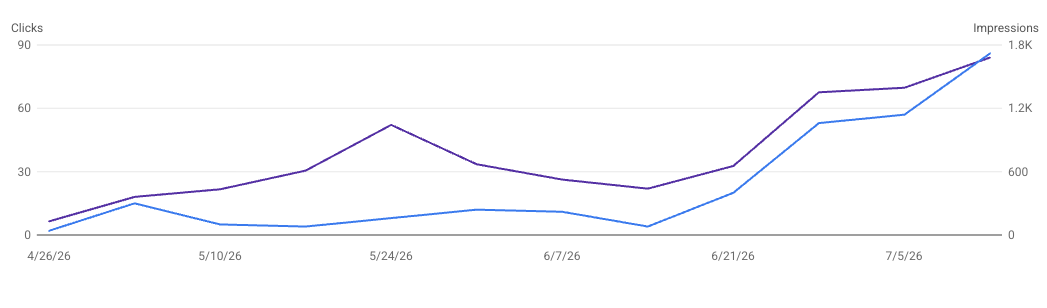
The chart plots data from late April through July 2026. Clicks use the left axis and impressions use the right. Review available pages or queries for the same period. Use business records to check inquiry outcomes separately.
These examples show search clicks and impressions and website sessions by channel. Confirm inquiry and customer outcomes in separate business records where they can be matched.
Why One Action Comes Before Another
The order should reflect the business consequence, strength of evidence, dependencies, and effort. A hypothesis deserves investigation; a confirmed defect may justify a repair.
Example Priority Record
Fixing the delivery problem removes a known obstacle to interpreting the later test. Measurement, sample quality, and test design still matter.
30 Days
Agree on the definitions and records. Repair a confirmed measurement or delivery defect before relying on comparisons.
60 Days
Scope the selected campaign, offer, website, or handoff change with its dependencies and a verification check.
90 Days
Evaluate the available outcomes and unresolved questions before deciding whether broader investment is justified.
A possible 30 / 60 / 90 day planning sequence. Scope, responsibilities, dependencies, and timing are agreed separately; the audit does not promise a three month result.
↑ 74% increase
19
33
Starting Point
After Three Months
+14
more new patients per month
Website and SEO Experience
19 → 33
The chart compares monthly new patients at the start and after three months of website design and SEO for a dental practice. Revenue Surge delivered the work through another agency. The engagement included no paid advertising.
The comparison documents a separate website design and SEO project. Measuring the contribution of either service would require separate evidence.

Documented Delivery Experience
Recommendations need to make sense in the systems where they will be implemented. Our work for Rosensteel Fleishman has included website design, ongoing website management, managed hosting, SEO, analytics, and content.
Website Design and Management
Managed Hosting
SEO and Content
Analytics
This project supports the service experience shown here. The diagnostic scenarios above are examples, not findings about this law firm.
Once audit priorities are clear, discuss the campaign, website, search, or measurement work needed to put them into practice.
Scope, Deliverables and Responsibilities
One business question is enough to start. Share a website link or a short example if it helps. We can then discuss what the audit would cover and which evidence you already have.
1
Describe the decision you need to make. If it involves several parts of marketing, we can discuss a broad audit. If it concerns one channel, page or report, a focused review may be enough.
2
Agree on the records, fit criteria and permissions needed for the review. The account owner approves access for the agreed tasks. Keep credentials and private customer details out of the form.
3
Agree on the report, proposed owners, dependencies and how the team would verify a change. Confirm who approves the work, who can implement it and what your team receives at handoff.
4
Confirm the review scope and price before starting. Implementation has its own scope. The number of channels, record quality, review depth, and handoff needs affect the work involved.
Marketing Audit Inquiry
Tell us where you need a clearer answer. We can discuss what the review would cover, what you would receive, and what will affect timing and price.
Add a website link or a short example if helpful. Keep credentials and private customer details out of the form.
Client Perspectives
Clients and partners describe their experience with Revenue Surge’s website work, implementation and reporting.
He does great work and he gets things up and running very quickly! I have been very pleased...

Dr. Raj Kakar
Dr. Kakar’s Pillow
Revenue Surge has created websites, landing page and optimization that has supported the digital strategies of THOR Associates as well as our clients. All with fantastic results...

Fern Lee
THOR Associates
It is refreshing to deal with a company which not only simplifies every step of implementation and reporting but, more importantly, does not over promise while often delivering above expectations. The company I am referring to is Revenue Surge...

George Smith
GWS Consulting
Marketing Audit Questions
Scope, evidence, responsibilities, and the next step.
Audit Planning
Tell us about one issue with spending, your website, reporting or inquiry fit. A brief example is optional. We can discuss which records to check and whether a broad audit or a focused review fits the question.

